





Press Releases

Advantages and disadvantages-USA Aircraft Group Corporation
Date: 2026/1/19
As the core instrument of modern air transportation, the advantages and disadvantages of civil aircraft can be analyzed from multiple dimensions such as technology, economy, society and environment. The following is the detailed combing:---
I. Advantages
1. Efficient and fast
· Speed: The cruising speed is about 800-900 km/h, far exceeding that of ground transportation (high-speed rail is about 300 km/h).
· Directness: It can cross terrain obstacles (oceans, mountains), realize point-to-point long-distance transportation, and greatly shorten the travel time.
2. Transport capacity and network coverage
· Large passenger capacity: wide-body passenger aircraft (such as Boeing 777 and Airbus A350) can carry 300-500 people, which is suitable for high-intensity routes.
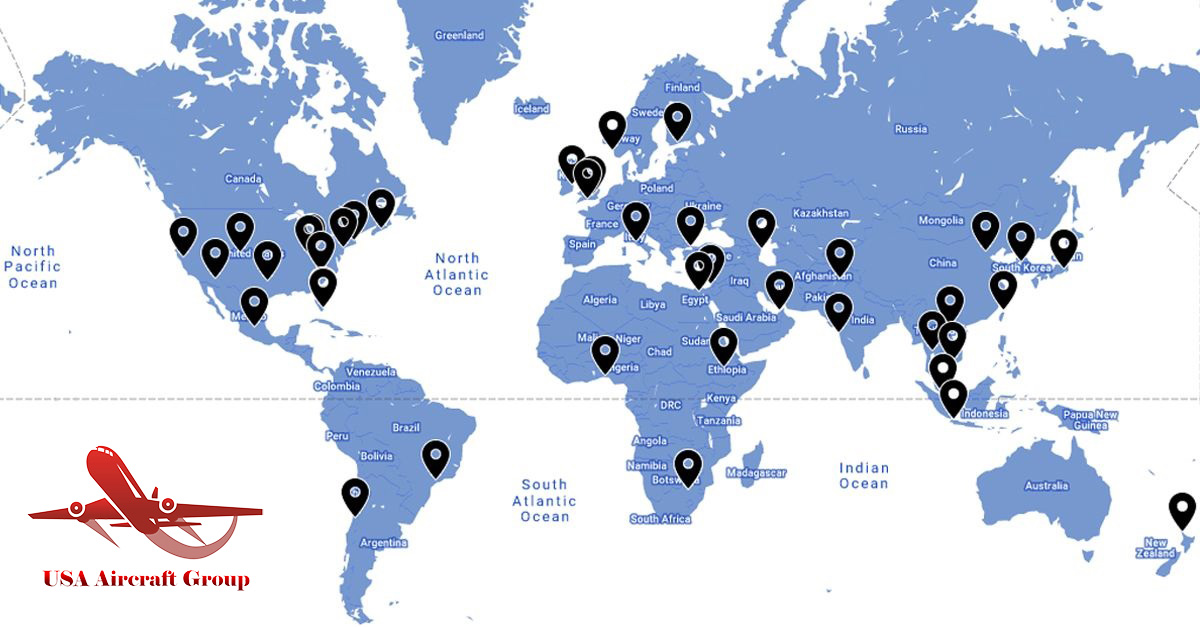
· Global network: the route covers major cities around the world, promoting international exchanges and economic integration.
3. Safe and reliable
· High safety standards: The aviation industry follows extremely strict safety standards (such as airworthiness certification, crew training, and maintenance procedures).
· Low accident rate: According to statistics, civil aviation is one of the means of transportation with the lowest mortality rate (the accident rate per million flights is about 0.01).
4. Economic promotion
· Industrial chain manager: drive manufacturing, tourism, logistics and other related industries.
· Globalization support: promoting trade, investment and the flow of people is an important infrastructure for economic globalization.
5. Advanced technology
· High degree of automation: Modern airliners are equipped with advanced avionics systems (such as autonomous driving and anti-collision systems) to improve operating efficiency and safety.
· Comfort improvement: optimize the cabin environment (pressurization, humidity control, entertainment system) to improve the riding experience.
---
II. Disadvantage
1. The environmental impact is prominent.
· Carbon emissions: The aviation industry accounts for about 2%-3% of global carbon emissions (data from the International Energy Agency), and high-altitude emissions have a greater impact on the greenhouse effect.
· Noise pollution: The take-off and landing stage causes noise disturbance to the surrounding communities of the airport.
2. High operating costs
· Fuel dependence: Fuel costs account for 20%-30% of the operating costs of airlines, and fluctuations in oil prices have a great impact on profits.
· High purchase and maintenance costs: a new passenger plane costs tens of millions to hundreds of millions of dollars, and the costs of maintenance, airport take-off and landing fees are also high.
3. Strong dependence on infrastructure
· Rely on airports and air traffic control: complete airport facilities and air traffic management systems are required, and the coverage is insufficient in developing countries or remote areas.
· Airspace congestion: Popular routes or hub airports are prone to flight delays.
4. Climate and airspace restrictions
· Weather sensitivity: Bad weather (typhoons, heavy snow, volcanic ash) may cause large-scale delays or suspensions.
· Airspace control: Military activities and political factors may temporarily close the airspace, affecting the route arrangement.
5. Limitation of comfort
· Narrow space: Economy class seat space is limited, and long-distance flights are prone to fatigue or health problems (such as deep vein thrombosis).
· The travel process is cumbersome: the check-in, security check and boarding process are time-consuming, and the airport is often located in the suburbs of the city.
6. Complication of hidden security risks
· Terrorism and illegal interference: threats such as hijacking and explosives require continuous investment in security resources.
· Human error and system risk: Despite the advanced technology, human operating errors or system failures may still cause accidents (such as the Boeing 737MAX incident).
---
III. Future challenges and direction of improvement
1. Green transformation
· Research and development of sustainable aviation fuel (SAF), electric or hydrogen-powered aircraft (such as Airbus ZEROe program).
· Optimize the route and engine technology to reduce carbon emissions and noise.
2. Technical upgrade
· Promote more efficient airliners (such as Boeing 787 using composite materials to reduce weight).
· Develop air traffic management systems (such as satellite navigation and AI scheduling) to improve the utilization rate of airspace.
3. Respond to emergencies
· Improve the risk resistance of the aviation industry (such as strengthening sanitary measures and flexibly adjusting the transportation capacity after the epidemic).
---
Sum up
Civil aircraft are irreplaceable in improving global connectivity and efficiency, but they need to continue to meet environmental, cost and safety challenges. The future development direction will focus on sustainability, intelligence and resilience improvement to balance social benefits and industry shortcomings.