

Press Releases
Airplanes in film and television-USA Aircraft Group Corporation
Date: 2026/1/14
In film and television shooting, the use of airplanes is mainly divided into two categories: using airplanes as "shooting platforms" and using airplanes as "shooting objects". The following figure clearly shows these two core uses and their subdivisions:```mermaid
Flowchart TD
A [Two core ways to use airplanes for film and television shooting] --> B [Use airplanes as a "shooting platform"]
A --> C [take the plane as the "object"]
B --> D [Airborne aerial photography system<br> (helicopter / fixed-wing aircraft)]
D --> E{main purpose}
E --> F [Obtain macro perspective<br> (urban skyline, natural landform)]
E --> G [High-speed chasing<br> (chasing cars, chasing ships)]
E --> H [as a mobile photography car<br> (running with the actor)]
C --> I [Out-of-flight shooting<br> (aircraft flight status)]
C --> J [In-plane shooting<br> (in-cabin scene)]
I --> K["machine-to-machine" shooting<br>(main way)]
I --> L [ground telephoto capture <br> (capture the shadow)]
J --> M [Static cabin shooting<br> (ground simulated flight)]
J --> N [Dynamic flight live shooting<br> (pursuit of extreme reality)]
M & N --> O [Combined with LED screen virtual shooting<br> (current mainstream technology)]
```
Next, we will disassemble these two categories in detail:
---
Category 1: Use the aircraft as a "shooting platform" - a flying "cara stand"
This is the most direct way to install the camera on the plane to shoot other things. The main carrier is helicopters, and fixed-wing aircraft are occasionally used.
1. Core equipment: on-board aerial photography system
· Carrier: usually helicopters with good mobility and low-speed hovering (such as Bell 407, European EC135). Fixed-wing aircraft are used for scenes that require high-speed follow-up or special perspectives.
· Plug-in gimbal: Install the gyroscope stabilizer gimbal under or on the side of the fuselage, which is the most critical technology. It can isolate the vibration of the aircraft and make the picture as stable as a rock. Representative brands include Shotover, Cineflex and TYCHY.
· Camera: The gimbal is equipped with movie-level cameras (such as ARRI Alexa Mini LF, RED V-Raptor).
· Control: The aerial photographer in the cabin manipulates the pitch, rotation, zoom and focus of the gimbal through the remote controller.
2. Purpose and application of shooting:
· Macro scene and geographical display: shoot the city skyline, magnificent mountains and rivers, the panorama of the battlefield, and large-scale crowds. This is the most common use.
· Chasing scene: Follow ground vehicles and water boats for high-speed chase, providing a dynamic God's perspective.
· Replace the large lifting arm: In the vast scene, the helicopter can be used as an extra-long mobile "lifting arm" to achieve a magnificent shot from close-up to panoramic.
---
Category II: Take the plane as the "object" - let the plane itself "act"
This is a more complex and expensive way to shoot images or cabin scenes of the plane itself.
A. Shoot the external flight footage of the plane
This is the main way to show the heroic posture of the aircraft.
1. "Choon-to-machine" shooting:
· Method: Use one or more modified "camera platform" aircraft (such as helicopters or stunt aircraft with gimballs mentioned above) to fly in formation with "actor aircraft".
· Key: Pilots are also "photographers". They need to cooperate precisely with the photography guidance and maintain a stable relative position at a very close distance (at times, the wing spacing is only a few meters) to obtain the best composition.
.
· Case: Most of the shocking air combat scenes in the "Zhuangzhi Lingyun" series come from here.
2. Ground telephoto shooting:
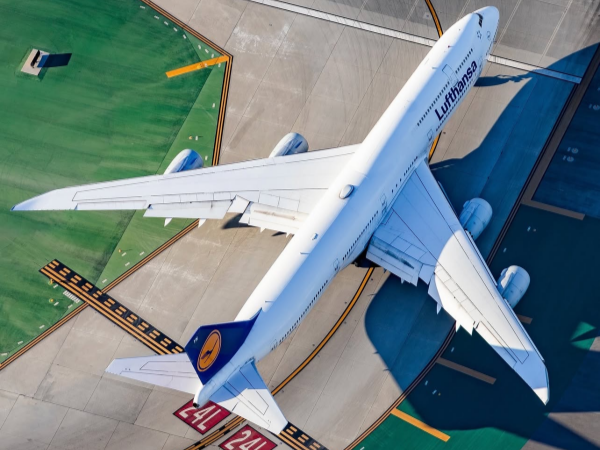
· Use an ultra-telephoto lens to photograph the low-flying of the plane from the ground. Combined with the side backlight of the morning dusk, you can take pictures of the extremely beautiful outline and halo of the aircraft. It is often used for opening or transition shots.
B. Take a shot of the inside cabin of the plane
This solves the problem of how to let actors perform "in flight".
1. Static simulation shooting (the most commonly used):
· Build a moving aircraft compartment in the studio (which can be tilted, rolled and swayed).
· Early method: hang a green curtain outside the porthole, and synthesize the sky and clouds in the later stage.
· Now the mainstream technology: LED virtual production (such as "Zhuangzhi Lingyun: Lone Ranger" is widely used). Use a giant LED screen outside the cabin to play the high dynamic range aerial photography materials that have been taken in advance. In this way, the actor can see the real scene outside the window, and there is also a real highlight reflection in his eyes, which is extremely immersive and not limited by the weather.
2. Dynamic flight live shooting (the most realistic and risky):
· Let the actors shoot in the cabin or cockpit of the real flying plane.
· Cockpit live shooting: The actor (or real pilot) completes the aerobatic flight action in the cockpit of the aerobatic aircraft, and the camera is fixed in the cabin. This can capture the most realistic G-force reaction and physical state.
· Cabin live shooting: The plane performs specific flight actions (such as rapid descent to simulate bumps), and the actors perform in the cabin. Facing the challenges of huge noise and vibration, special equipment fixation and post-dubbing are required.
---
Workflow and key considerations
1. Planning and pre-visualization: Use storyboards and dynamic previews to accurately plan each shot and determine which shooting method is needed.
2. Professional team formation: Aviation coordinators and stunt pilots with film and television shooting experience must be hired. They are the guarantee of safety and success.
3. Airspace and permit: Apply for a shooting permit for a specific airspace several months in advance, and coordinate with civil aviation and military management departments.
4. Safety first: All devices must be locked multiple times, and personnel must receive security training. Any shot with higher risk than the benefit will be rejected or alternatives will be sought (such as virtual shooting).
5. Later integration: Real aircraft shots usually need to be seamlessly synthesized with CGI special effects (missiles, explosions, damage effects) and digital scenes to complete the final shocking picture.
Sum up
Simply put, the use of airplanes in film and television shooting is either "let the plane take the camera to shoot something else" or "try best to photograph the plane itself". With the maturity of LED virtual production technology, many high-risk in-cabin real shots and complex views outside the window can now be realistically completed in a safe and controllable studio. However, for the real physical beauty of the outside of the aircraft that cuts through the sky, "air-to-air" live shooting is still an irreplaceable "crown pearl" and one of the ultimate visual weapons of Hollywood's top blockbusters