










Press Releases

Aircraft fuel supply engine-USA Aircraft Group Corporation
Date: 2025/12/18
The process of aircraft fuel from the fuel tank to the engine combustion chamber is a highly sophisticated and automated system project. Simply put, it is divided into several core stages: storage, oil supply, control and combustion.Next, I will take modern jet airliners (such as Boeing and Airbus) as an example to disassemble this process in detail:
1. Fuel storage
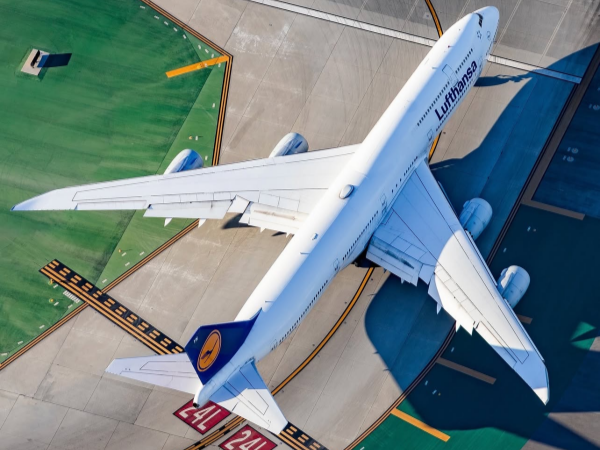
Aircraft fuel is mainly stored in the main fuel tank inside the wing. In order to balance the center of gravity of the aircraft, sometimes there is a central fuel tank in the center of the fuselage.
· Why is it in the wing? This takes advantage of the space inside the wing, and the weight of the fuel can offset part of the lift of the wing in flight and reduce the structural load at the root of the wing.
· Fuel tanks are not "simple containers": they are integral fuel tanks, that is, the wing structure itself is sealed as a fuel tank, and there is a partition inside to prevent the fuel from shaking violently.
2. Oil supply process (from the fuel tank to the engine)
This is the most core part of the fuel system, which is usually divided into three levels:
Level 1: From the fuel tank to the engine drive pump
· Booster pump/electric fuel pump: One or more electric centrifugal pumps (called booster pump) are installed at the bottom of each fuel tank. Its main function is not to supply oil directly to the engine, but to ensure that there is always positive pressure in the fuel pipeline, prevent the generation of gas plugs in high-altitude and low-pressure environments, and provide stable fuel supply for the main fuel pump of the engine. Even if all electric pumps fail, the oil supply can be guaranteed (called gravity oil supply/suction oil supply) by relying on the pressurized fuel tank by the engine and the suction of the engine's main fuel pump.
Level 2: Engine main fuel pump
· After the fuel is electrically pumped to the corresponding engine, it first enters the engine drive pump. This is a powerful high-pressure centrifugal pump or gear pump driven directly by the engine accessory gearbox.
· Its function is to greatly increase the fuel pressure (from tens of psi to hundreds or even thousands of psi) to prepare for the subsequent passage of fuel filter and fuel controller.
Level 3: Fuel heating and filtration
· Before high-pressure fuel enters the precision control components, it must be filtered to remove any small impurities.
· At the same time, the fuel will flow through the fuel-lubricating oil heat exchanger. Here, low-temperature fuel is used to cool the engine's high-temperature lubricating oil (oil), and the fuel itself is heated. Heating fuel is very important:
1. Prevent freezing: The trace amount of moisture that may be contained in high-altial fuel will freeze, blocking the filter or pipeline.
2. Improve the atomization effect: Fuel with a slightly higher temperature has better atomization effect and more complete combustion in the combustion chamber.
3. Fuel control and measurement (brain and commander)
This is the most complex part of the technology, which is completed by the fuel control system. Modern aircraft all adopt the FADEC (full-power digital engine control) system.
· Fuel metering unit: This is a key executive component of the FADEC system. FADEC receives massive data from throttle lever instructions, atmospheric data, engine sensors (speed, temperature, pressure, etc.), and performs countless calculations per second.
· Accurate quantification: FADEC accurately calculates how much fuel is needed according to the current flight stage (takeoff, climb, cruise, landing) and the engine status, and then orders the fuel metering door to open to a specific opening to allow the precisely calculated fuel flow to pass.
· Purpose: Under the premise of ensuring the thrust required for engine output, achieve the most efficient and safest combustion.
4. Final atomization and combustion (from liquid to flame)
The accurately measured high-pressure fuel is sent to the last key part of the combustion chamber - the fuel nozzle.
· Atomization: The fuel nozzle crushes high-pressure fuel into extremely fine oil mist particles (similar to a sprayer) and fully mixes it with the high-pressure air from the compressor.
· Combustion: This highly atomized oil-gas mixture is sprayed into the combustion chamber and ignited by the ignition nozzle to form a stable and efficient continuous flame, produce high-temperature and high-pressure gas, and drive the turbine to work.
5. Additional key functions: other roles of fuel
Aircraft fuel is not only an energy source, but also an important thermal management medium and leveling tool:
· Coolant: As mentioned above, it is used to cool engine lubricating oil, hydraulic oil, IDG (Integral Drive Generator), etc.
· Flat fuel: There are transmission pipelines and pumps between the fuel tanks of large aircraft. The flight management computer can automatically transfer fuel between different fuel tanks to maintain the optimal center of gravity of the aircraft, reduce flight resistance, and save fuel.
Summary process overview:
Fuel tank (wing/center) → electric booster pump (establish positive pressure) → engine main fuel pump (large supercharge) → fuel filter/fuel-lubricating oil heat exchanger (filtration and heating) → fuel metering unit (accurate measurement under FADEC control) → fuel nozzle (atomization) → Combustion chamber (combustion)
The whole system is full of redundant design (such as multiple sets of pumps, transfer oil supply capacity) and real-time monitoring to ensure that the engine can obtain fuel supply safely and reliably under any single point failure.