







Press Releases

Aircraft structure-USA Aircraft Group Corporation
Date: 2025/12/11
The structural design of the aircraft pursues "lightweight, high strength and high rigidity", that is, reduce the weight as much as possible under the premise of ensuring the safe carrying of all loads (aerodynamics, inertial force, internal pressure, etc.). This is mainly achieved through advanced materials (such as aluminum alloy, titanium alloy, carbon fiber composites) and exquisite structural design.---
Five main components of aircraft structure
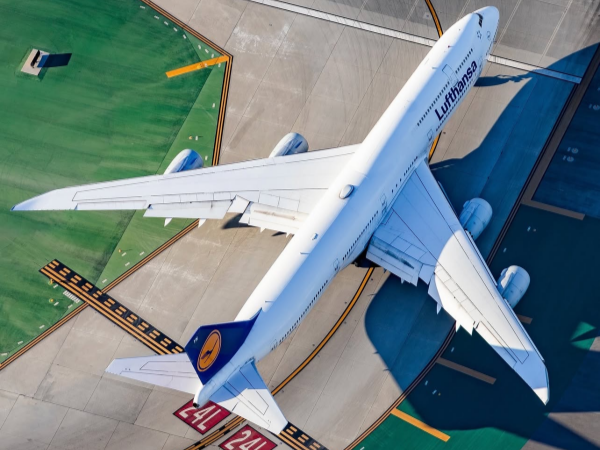
1. Fuselage
The fuselage is the main body of the aircraft, which is used to accommodate the crew, passengers, cargo, equipment, and connect all other parts together.
· Structure: like a cylinder, the main structure includes:
· Skin: the shell, which withstands aerodynamics and transmits loads.
· Truss/long girder: longitudinal reinforcement, supporting skin.
· Partition/frame: lateral reinforcement, used to maintain the cross-section shape of the fuselage and withstand concentrated loads (such as the force from the wings and landing gears).
· Floor beam: support the cabin/carry hold floor.
· Functional subdivision: usually divided into the head (cockpit, radar), middle cabin/carrary compartment, and rear tail cone.
2. Wing
The wing is the main component that generates lift, and it is also the main position for fuel storage and engine mounting.
· Main structure:
· Wing beam: the main longitudinal load-bearing component extending from the wing root to the wing tip, like the "ridge beam" of the wing, withstands most of the bending moment and shear force.
· Wing rib: a transverse component that determines the shape of the wing profile and transmits the load to the wing beam.
· Skinning: form a smooth pneumatic shape, form a wing box structure with the wing beam and wing ribs, and jointly bear the torque and bending moment. Modern aircraft skin is the main load-bearing part.
· Auxiliary devices:
· Aleron: Located on the outer side of the rear edge of the wing, it is used to control the aircraft's rolling (transverse rolling).
· Flap: Located on the inner side of the rear edge of the wing, it protrudes during take-off and landing, increasing lift and drag.
· Seam wing: located at the front edge of the wing, it works in conjunction with the flaps to improve the airflow under the large angle of attack.
· Spoiler: Located on the surface of the wing, it can be used as a deceleration plate and an auxiliary roll control.
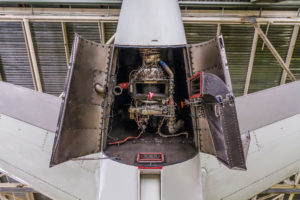
3. Tail surface of an aircraft
The tail provides stability and maneuverability of the aircraft in the direction of pitching and yaw.
· Horizontal tail: including a fixed horizontal stability surface and a movable rudder. The rudder controls the pitch of the aircraft (head up/head down).
· Vertical tail: including fixed vertical stability surface and movable rudder. The rudder controls the yaw of the aircraft (the head swings left and right).
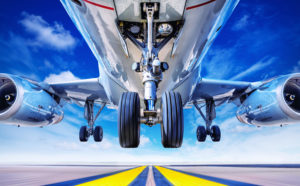
4. Landing gear
It is used to support the aircraft when it moves, takes off, lands and parks on the ground.
· Type: Common front three-point type (two main landing gears are behind the center of gravity, and one front landing gear is at the head of the machine).
· Composition: including shock-absorbing pillars (absorbing landing impact), wheels, tires, brake system (braking and pushback are the main deceleration devices), and the retraction system (retracted during flight to reduce resistance).
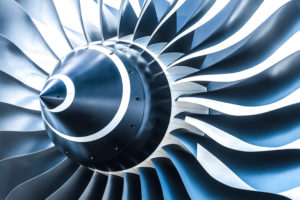
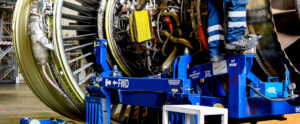
5. Power device
Provide thrust for the aircraft. For common jets, this includes not only the engine itself, but also:
· Engine short compartment: streamlined shell to protect the engine and optimize the airflow.
· Hanger: a structure that fixes the engine to the wing or body.
· Intake duct, fan, compressor, combustion chamber, turbine, tail spray pipe (core parts of the engine).
· Pushback device: after landing, part of the airflow is turned forward to assist in slowing down.
---
Key connection structure
· Wing-fuselage connection: This is one of the most concentrated and critical parts of the whole machine. The huge wing lift is transmitted to the fuselage through several strong central wing box joints. The structure of this area is particularly strengthened, and high-strength steel or titanium alloy is commonly used.
· Tail-fuselage connection: there is also a reinforced joint to withstand the load transmitted by the tail.
Material evolution
· Traditional: mainly aluminum alloy, because of its good specific strength (strength/weight ratio).
· Modern:
· Carbon fiber composite materials: widely used in the wings, fuselage skins, tails, etc. of new-generation aircraft (such as Boeing 787 and Airbus A350). The advantages are lighter, fatigue-resistant, and can be molded as a whole to reduce parts.
· Titanium alloy: used in high-temperature and high-stress areas (such as engine hangers, landing gears, wing body connectors).
· Advanced aluminum alloy and steel: still used in specific parts.
Sum up
The structure of an airplane can be vividly understood as:
· The fuselage is the trunk and the cargo hold.
· The wing is the arm that generates lift, and the inside is still the fuel tank.
· The tail is a balanced tail.
· The landing gear is a retractable leg and foot.
· The engine is the heart that provides power.
All these parts are integrated through precise mechanical design to ensure that the aircraft can fly safely, efficiently and comfortably at an altitude of 10,000 meters. I hope this introduction can help you establish the basic concept of aircraft structure! If you are interested in a specific part (such as the details of the wing structure and the application of composite materials), we can discuss it further.